


Pandavas in Darma Valley – Myth, Memory, or a Forgotten Himalayan Truth
The Legend of Pandavas in Darma Valley
The mystery of Pandavas in Darma Valley has intrigued travelers, historians, and locals for generations.
High in the Kumaon Himalayas, beyond the reach of crowded routes, lies Darma Valley — a place where silence carries stories older than memory.
This is not a valley that explains itself easily.
It reveals itself slowly — through its landscapes, its people, and the stories that have lived here for generations.
Among them is one that refuses to fade:
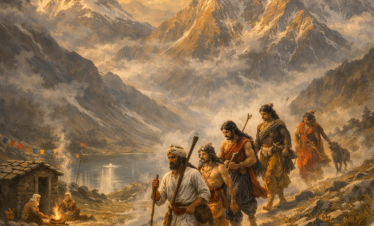
That the Pandavas once walked through this valley — not just as warriors of the Mahabharata, but as travelers, seekers, and wanderers in the Himalayas.
But to understand this story, we must first understand something deeper.
Not all journeys in the Mahabharata are the same.
Why Darma Valley is Linked to Pandavas - Vanvas, Agyatvas, and the Himalayan
There is often a quiet confusion in travel narratives between three distinct phases of the Pandavas’ life:
- The 12-year Vanvas (exile)
- The 1-year Agyatvas (life in hiding)
- The Mahaprasthan (final journey towards heaven)
Each of these carries a different geography — and a different meaning.
Myth vs Memory – What Could Be True? Pandavas in Darma Valley
Agyatvasa – The Year of Disguise
According to the Mahabharata (Virata Parva), the Pandavas spent their final year of exile in disguise in the kingdom of Matsya, traditionally identified near present-day Rajasthan.
During this period, their mother Kunti was not with them and remained in Hastinapur.
This makes it unlikely, from a scriptural perspective, that regions like Darma Valley or Kuti were part of their Agyatvas.
Yet, in the Himalayas, stories evolve differently.
Some local traditions still associate Pandavas in Darma valley with this phase — perhaps because these landscapes feel hidden, untouched, and far removed from the world.
Vanvas — The Years of Wandering
If there is one phase where the Himalayas begin to align with the story of the Pandavas, it is the Vanvas — the 12-year exile.
During this period, the Pandavas are described as moving across forests, mountains, and remote regions, often accompanied by their mother, Kunti.
This is where local belief in Darma and Kuti finds its strongest footing.
The Story of Kuti — A Village Named After a Mother?
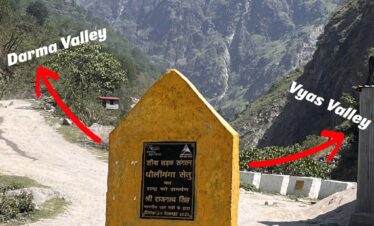
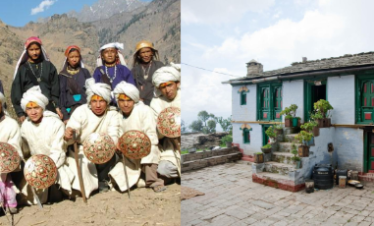
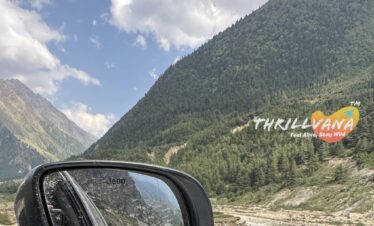
In the upper reaches of the valley lies Kuti — a quiet Himalayan village surrounded by towering peaks and silence.
Locals believe that this village is named after Mata Kunti, the mother of the Pandavas.
According to oral tradition, she stayed here with her sons during their years of exile — not as royalty, but as travelers seeking refuge in the mountains.
Some even point to ancient stone platforms in the village, believed to be places where the Pandavas and Kunti once sat.
There is no written record that confirms this.
But in places like Kuti, history is not always written — it is remembered.
A Sacred Landscape in Ancient Texts
Ancient texts like the Skanda Purana, particularly in its Manas Khand, describe the broader Kumaon Himalayas as a sacred region — a Dev Bhoomi where divine presence and spiritual journeys are deeply rooted.
While these texts do not specifically map the Pandavas to Darma Valley, they reinforce the idea that this landscape has long been seen as a space for penance, movement, and transformation.
The Panchachuli Peaks — Where the Journey Changes
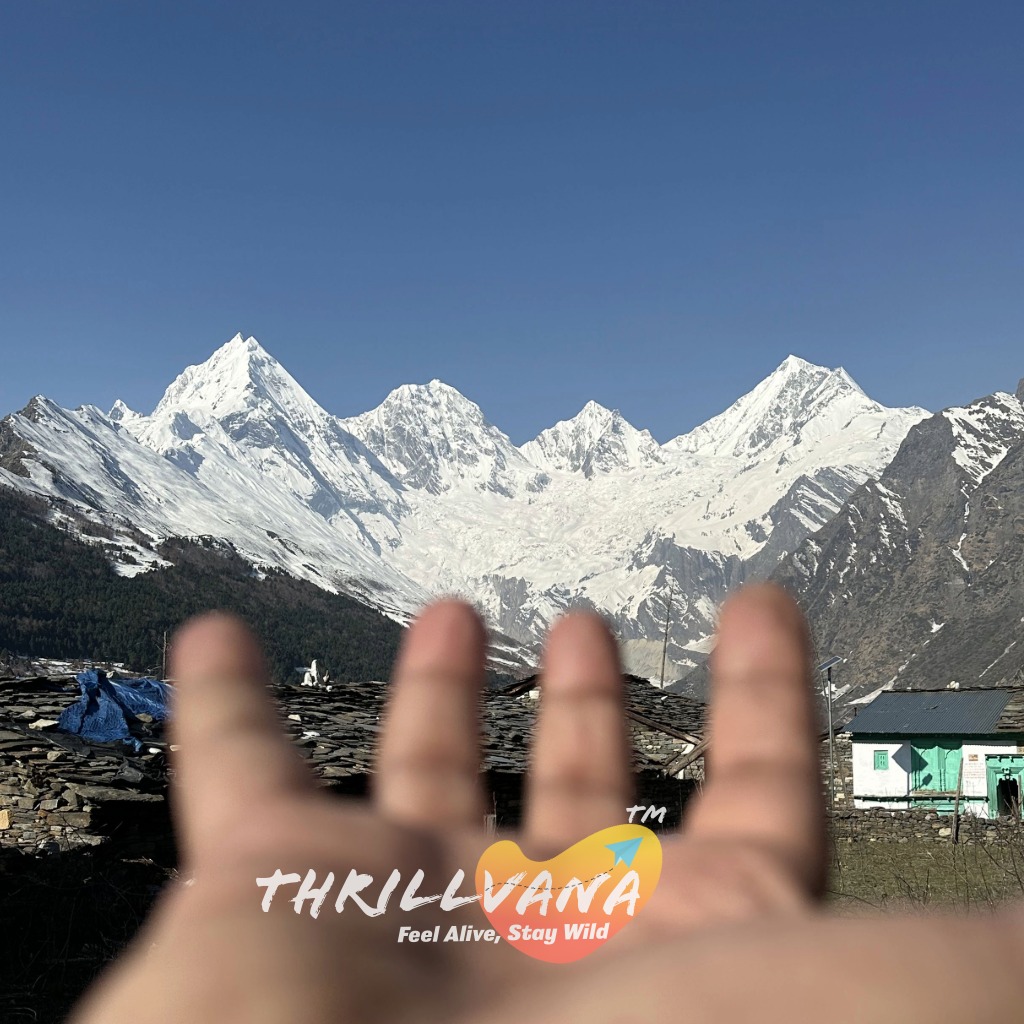
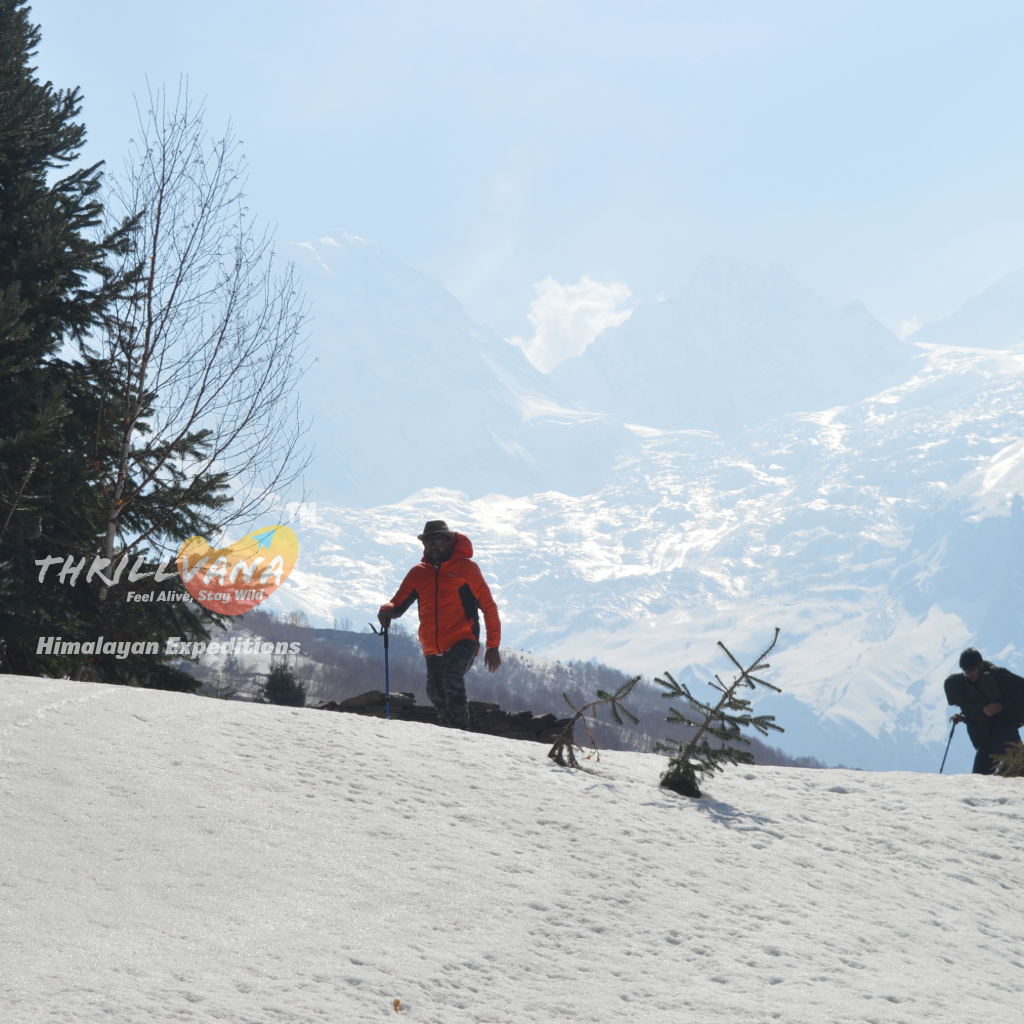
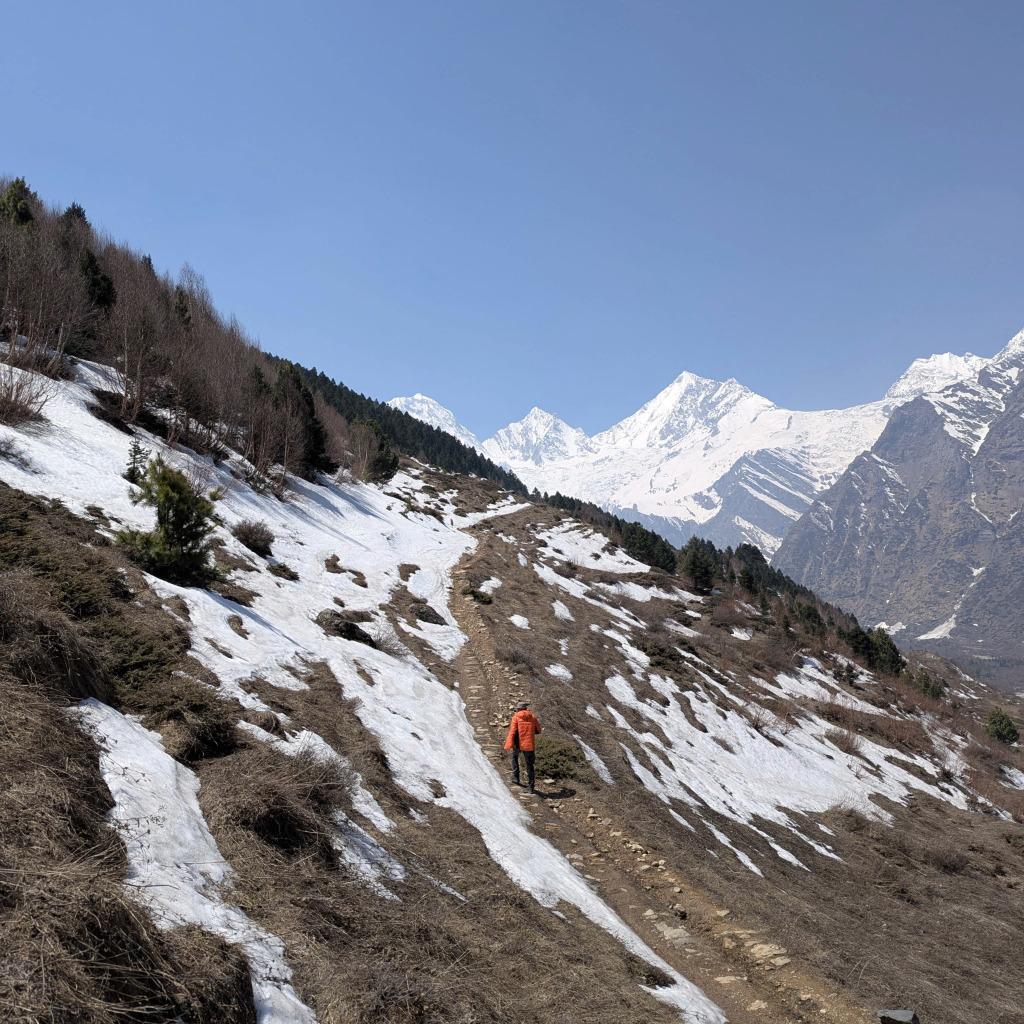
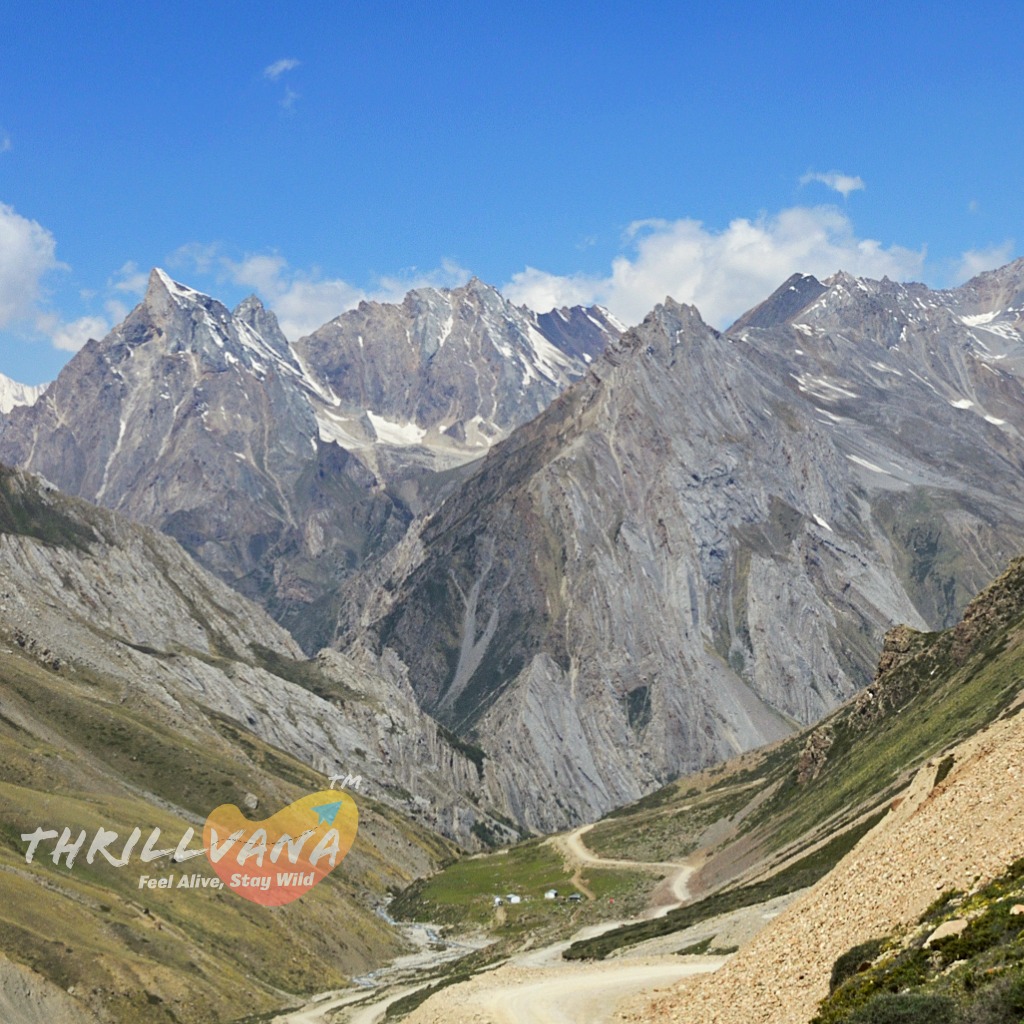
If Kuti tells the story of their stay, Panchachuli tells the story of their departure.
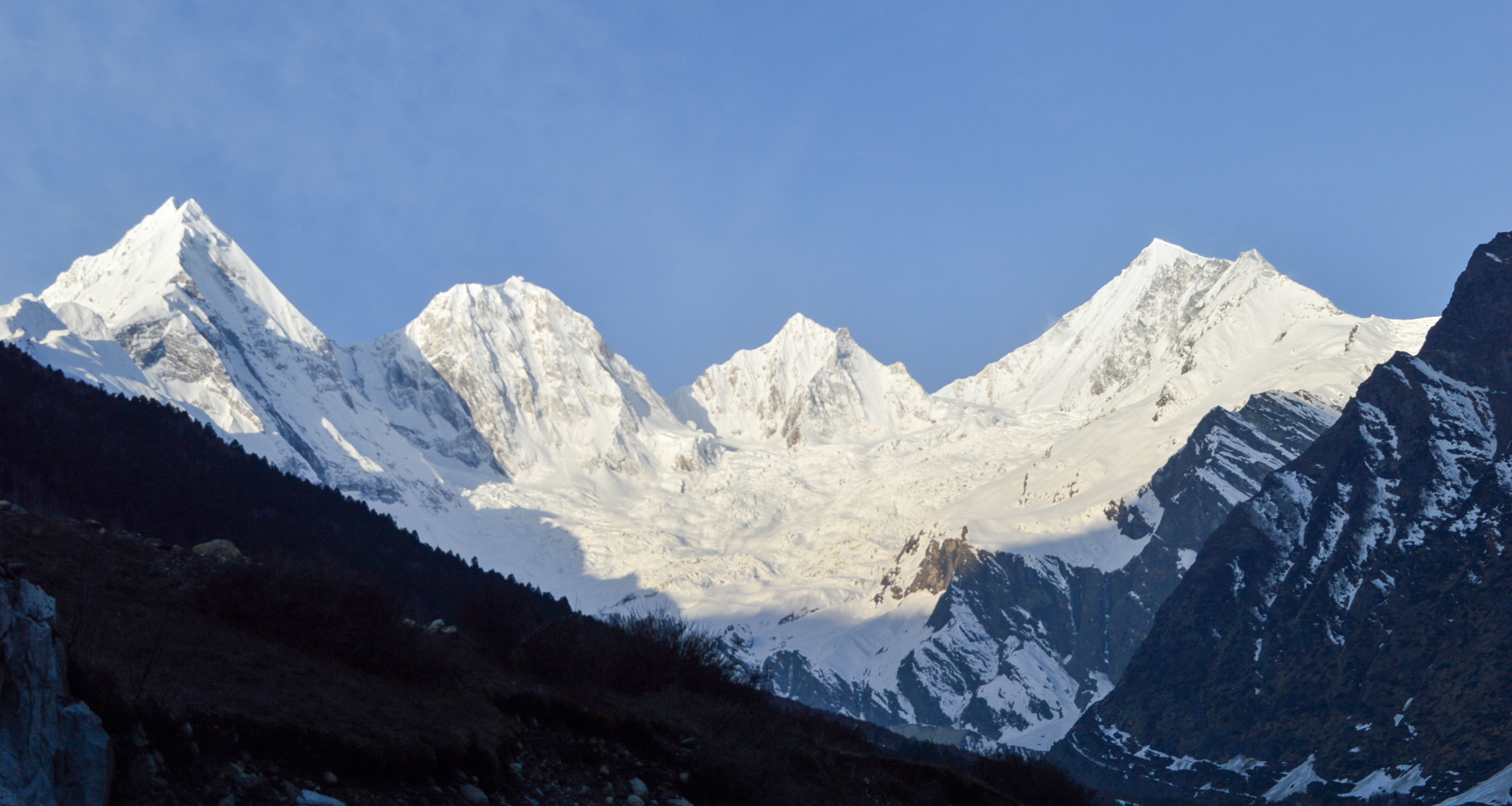
The five peaks of Panchachuli rise dramatically over Darma Valley, forming one of the most iconic landscapes in the Kumaon Himalayas.
Locally, they are known as the five chulhas — the cooking hearths of the Pandavas.
It is believed that before beginning their final ascent towards heaven, the Pandavas prepared their last meal here.
Some traditions even associate each peak with one of the brothers, symbolizing their presence in the landscape.
Whether symbolic or literal, this belief transforms the peaks from geography into memory.
Mahaprasthan — The Final Ascent
The Mahabharata describes the Pandavas’ final journey as a northward ascent into the Himalayas — a path of renunciation where one by one, they leave behind everything earthly.
This journey is most strongly associated with regions like Badrinath and Mana Village, where sites such as:
- Vyas Gufa
- Saraswati River Origin
- Swargarohini Peak
form a well-established narrative of their ascent towards heaven.
And yet, across the Himalayas, different valleys seem to hold echoes of this journey.
Darma Valley is one such echo — not as a defined endpoint, but as a passage, a pause, a preparation.
Between Maps and Memory
Explorers like Nain Singh Rawat, working with the Survey of India, documented these regions with precision — measuring distances, mapping routes, defining geography.
Records like the Himalayan Gazetteer attempted to capture the life and structure of these valleys.
But maps describe where you can go.
They don’t describe what a place means.
That meaning still lives in stories.
The Living Tradition — Pandav-Lila
Even today, in parts of Kumaon, local communities perform Pandav-Lila — a ritualistic storytelling tradition that brings the lives of the Pandavas alive through music, dance, and narrative.
This is not just mythology being retold.
It is memory being preserved.
In these performances, the Pandavas are not distant figures of a text — they are part of the living identity of the region.
Sitting in Darma Valley — Where It All Connects
There comes a moment in Darma Valley that no itinerary can plan.
Maybe you’re sitting in Kuti, watching the light change on the mountains.
Maybe you’re standing quietly, looking at the Panchachuli peaks.
And something shifts.
The story — of exile, of wandering, of the final journey — stops feeling like something you need to verify.
It begins to feel like something you can understand.
Not through proof.
But through presence.
So, What is the Truth?
Did the Pandavas stay in Darma Valley during their Vanvas?
Did they cook their last meal at Panchachuli before ascending towards heaven?
There is no single answer.
But there is something more valuable than certainty:
A continuity of belief.
A landscape that supports the story.
And an experience that makes it feel real enough to matter.
Explore Darma Valley with ThrillVana
Darma Valley is not a destination you simply visit.
It is a place you experience — slowly, quietly, and with awareness.
At ThrillVana, we design journeys that go beyond routes and checklists.
We help you connect with the Himalayas — through their landscapes, their people, and their stories.


