Menu

Om Parvat: The Mountain That Chants in Silence

Discover the mystical beauty of Om Parvat, one of the Himalayas’ most revered peaks, famed for the naturally formed snow pattern resembling the sacred Om symbol.

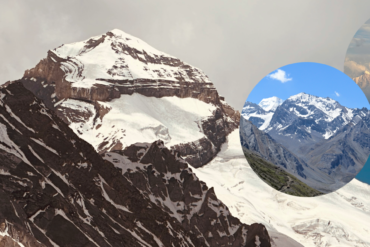
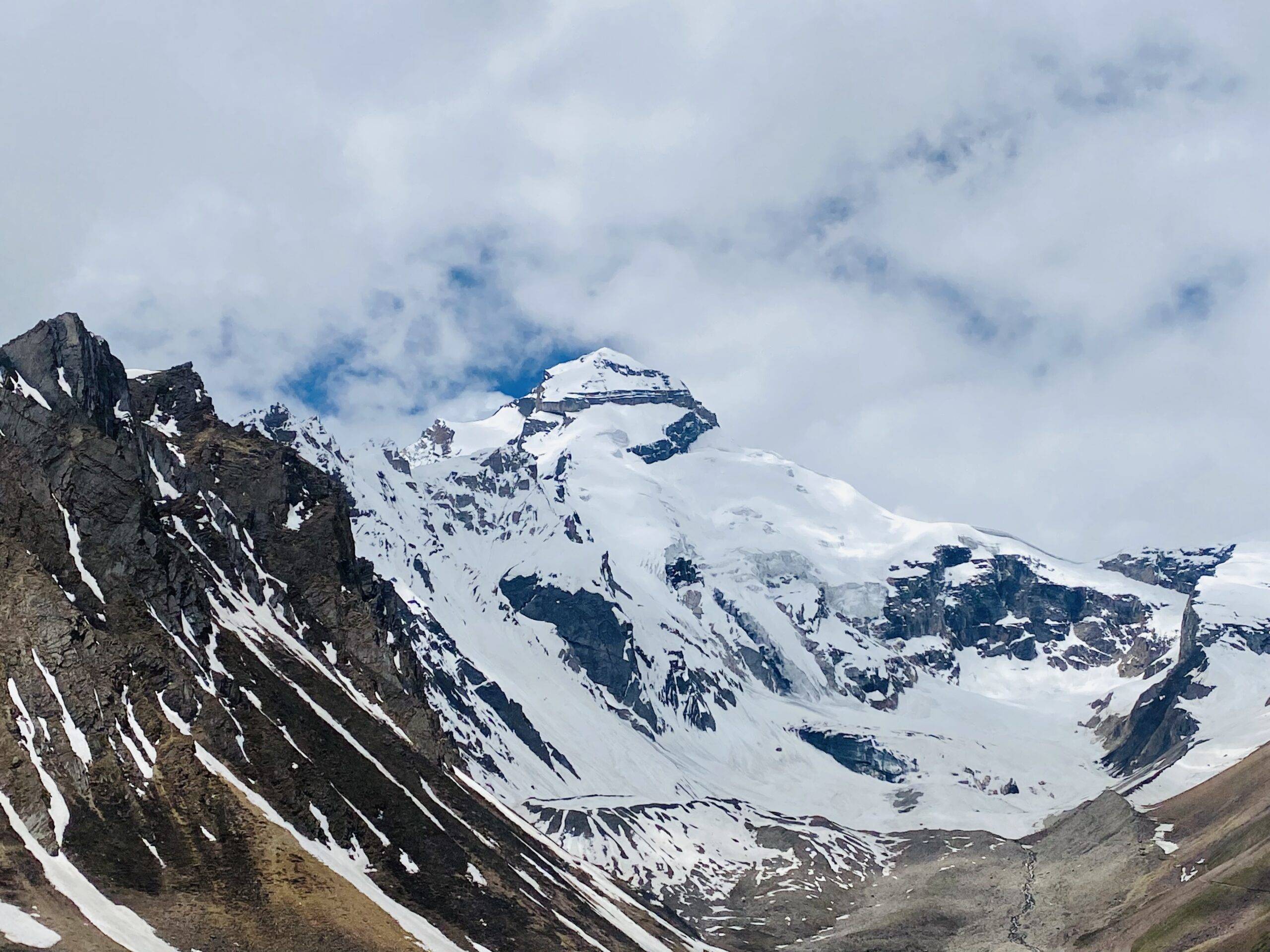
The Legend of the Eighth Peak At 19,000 feet, the wind doesn’t just howl; it vibrates. For centuries, the Bhotia people of the Vyas Valley have looked toward a specific black-rock face where the snow refuses to melt randomly. Instead, it settles into the perfect, ancient curves of the sacred syllable ‘ॐ’ (Om). Mythology tells us there are eight such mountains in the world, but this is the only one the gods have allowed human eyes to find.

We don’t just show you a peak; we bring you to the very edge of the Vedic world.

The Mystery of the Vyas Valley: Where History Breathes

This isn’t just a trekking trail; it’s a portal to the Mahabharata. As we lead you through the high-altitude hamlets of Gunji and Nabi, you are walking the same path the Sage Ved Vyas took to his cave (Vyas Gufa) to compile the Vedas.

The air here is thin, but heavy with stories. You’ll see the Sheshnag Parvat, a mountain shaped like the thousand-headed serpent, standing guard over the valley. At Thrillvana, our guides are Kumaoni locals who grew up with these legends—they don’t just know the way; they know the why behind every sacred stone.

The Trek Reality: Grit, Camphor, and Thin Air

Let’s be pragmatic: Reaching the Nabhidhang viewpoint (14,100 ft) is a test of spirit. The road from Dharchula is a masterpiece of cliff-side engineering, and the oxygen levels will challenge your lungs.

We respect the sanctity of your journey and the needs of your body:

  • The “Camphor & Cloves” Protocol: We provide small pouches of camphor for you to inhale—a time-tested mountain remedy to ease breathing in thin air.

  • Sattvic Nutrition: We understand the pilgrim’s path. Our trek menu is strictly Onion and Garlic free, focusing on light, energy-giving Mandua (millet) rotis, mountain lentils, and healing herbal teas that keep your system clean and ready for the climb.

  • Permit Mastery: We handle the complex Inner Line Permits required for this sensitive border zone.

Insider Tip: The Golden Window

Most trekkers arrive at the viewpoint, take a photo, and leave. Don’t. Between 6:05 AM and 6:15 AM, if the sky is clear, the rising sun hits the “Om” at a precise 45-degree angle. For exactly ten minutes, the snow glows like molten gold against the black rock. This is the moment the mountain “wakes up.”

Highlights

Om - Nabidhang Viewpoint

Sheshnag formation

Kalapani

Vedvyas Cave

Location

Pithoragarh

Altitude

18,000 ft

Spiritual Importance

Natural Om formation

Landscape

Himalayas

Om Parvat on the Ancient Kailash Mansarovar Route

Om Parvat lies close to Lipulekh Pass, one of the most important historic gateways between India and Tibet.

For centuries, this mountain pass served two vital roles.

Pilgrimage Route

Pilgrims travelling from India toward Mount Kailash and Lake Mansarovar crossed Lipulekh Pass before descending into Tibet toward the town of Taklakot.

Ancient Trade Corridor

Long before modern borders existed, caravans travelled through these valleys carrying goods between India and Tibet.

Common trade goods included:

  • wool and pashmina
  • Tibetan salt
  • borax and medicinal herbs
  • grains and spices

Remote Himalayan villages such as Gunji, Kalapani, and Nabidhang developed as important rest stops for traders and pilgrims travelling across the high mountains.

Even today, Lipulekh remains an official route for the Kailash Mansarovar Yatra.

The natural ॐ (Om) symbol formed by snow on the face of Om Parvat.

Although the formation appears mystical, scientists explain the Om symbol through a combination of geology and snow deposition patterns.

The mountain face contains dark metamorphic rock ridges arranged in natural patterns.

During winter and early summer, snow accumulates along these ridges in ways that highlight shapes resembling the sacred “ॐ” symbol.

Several environmental factors influence this phenomenon:

  • slope orientation
  • wind direction
  • snow accumulation patterns
  • sunlight and seasonal melting cycles

When these conditions align perfectly, the contrast between snow and dark rock creates the striking symbol visible from Nabidhang.

Life in the Border Valleys

The valleys surrounding Om Parvat are home to the Rung community, one of the oldest Himalayan trading cultures.

For centuries their lives revolved around seasonal trade with Tibet, pastoral migration, and pilgrimage routes through the mountains.

Villages such as Gunji, Nabi, and Kuti continue to preserve traditions deeply connected to the rhythms of the Himalayas.

Experiencing Om Parvat Today

In recent years improved border infrastructure has made the region more accessible.

Road development along the Dharchula–Lipulekh corridor, accelerated during the late 2010s and early 2020s, now allows travellers to reach Nabidhang and witness Om Parvat more easily than in the past.

Yet despite these developments the landscape remains remarkably remote.

Standing before Om Parvat — where nature itself appears to inscribe the sacred syllable across a Himalayan mountain — many travellers feel that the boundary between myth and reality becomes beautifully blurred.

Why Visit Om Parvat?

Sacred Natural Wonder

Om Parvat is famous for the naturally formed snow pattern on its face that resembles the sacred Hindu symbol Om.

Scenic Himalayan Journey

The route to Om Parvat takes you through dramatic mountain roads, river valleys, and remote Indo-Tibetan border villages.

Spiritual and Visual Experience

The sight of Om Parvat from Nabidhang leaves travelers with a rare mix of peace, awe, and reverence.


Best Time to Visit Om Parvat

Om Parvat Travel Guide High in the eastern Kumaon Himalaya, Om Parvat is a place where dramatic mountain scenery, sacred lakes, remote villages, and overland adventure come together. This page layout is designed as a ...
Read Detailed Guide →

Leave Only Footprints

Why ThrillVana?

Thrillvana operates here with a “Mountain First” mentality. We use no disposables. We respect the local shrines. We are guests in the home of the Mahadev.

Gallery

Blog & Tips

Himalayan Travel Insights & Stories

Explore insights on Adi Kailash, Om Parvat, Darma Valley, and Himalayan travel experiences.

A clear, unfiltered close-up view of the five snow-capped Panchachuli peaks in the Darma Valley, Uttarakhand.

Pandavas in Darma Valley

Pandavas in Darma Valley – Myth, Memory, or a Forgotten Himalayan Truth The Legend of Pandavas in Darma Valley The...

Adi Kailash Yatra secrets and preparation guide

Adi Kailash Yatra Secrets: 10 Things No One Tells You

Most travel brochures show you the mirror-reflection of Adi Kailash in Parvati Kund and call it a day. But after...

Mount Adi Kailash and Om Parvat yatra briefing and Om Parvat View from Nabidhang View Point by ThrillVana.

Spiritual Significance of Om Parvat: The Mystery of the Sacred ॐ

Note from the Founder “I have stood at the Nabhidang viewpoint three times, watching the first light of dawn hit...

, ,

Duration 8 Days
Difficulty Medium
Activity 5 Activities
55000

FAQ

No. The 'Om' symbol on Om Parvat is a 100% natural phenomenon formed by snow deposition on the rock's unique fissures. It remains visible throughout the year, though it is clearest from May to October.

No. Climbing Om Parvat is strictly prohibited due to its religious sanctity and its location on the sensitive Indo-Nepal-Tibet border. Travelers view the peak from the Nabhidhang vantage point.

While often visited together, they are distinct peaks. Adi Kailash (6,191m) is a physical "twin" of Mt. Kailash in Tibet, while Om Parvat (5,590m) is famous for the naturally occurring 'Om' symbol.

  • Inner Line Permits are issued at Dharchula. You need a medical fitness certificate and a police verification. As part of your Thrillvana expedition, we facilitate this entire process for you.

WhatsApp