





Select date
Private journeys are curated experiences and require a quick consultation with our team to align expectations, preferences, and feasibility before booking.
-
Available Available PackagesFridaySeptember 4, 2026FridaySeptember 11, 2026₹45550Available
-
Limited Available PackagesSaturdaySeptember 5, 2026SaturdaySeptember 12, 2026₹45550Available
Kathgodam → Jageshwar (1N) → Dharchula (1N) → Gunji/Nabi (2N) → Narayan Ashram (1N) → Patal Bhuvaneshwar (1N) → Chaukori (1N) → Kathgodam
Adi Kailash Yatra from Kathgodam with Om Parvat Darshan
Experience the Adi Kailash Yatra from Kathgodam through Kainchi Dham, Jageshwar, Dharchula, Gunji, Adi Kailash and Om Parvat. Explore sacred Himalayan landscapes, remote villages, ancient temples and Patal Bhuvaneshwar on a thoughtfully paced 8-day journey.
Highlights
- Kainchi Dham – Visit the famous Neem Karoli Baba Ashram.
- Kasar Devi Temple – Explore the ancient shrine and famous Crank’s Ridge.
- Chitai Golu Devta – Seek blessings at Kumaon’s famous Bell Temple.
- Jageshwar Dham – Discover ancient Shiva temples in a beautiful deodar forest.
- Elagad Waterfall – Enjoy a scenic Himalayan waterfall on the route to Dharchula.
- Chiyalekh & 36 Hairpin Bends – Experience one of the most dramatic mountain roads.
- Gunji & Nabi Village – Experience authentic Bhotia culture and Himalayan hospitality.
- Adi Kailash – Experience Darshan of the sacred Chhota Kailash.
- Parvati Sarovar & Gauri Kund – Discover the sacred lakes beneath Adi Kailash.
- Kalapani & Ved Vyas Cave – Explore the sacred landscape linked to the Kali River.
- Om Parvat – Witness the famous natural ॐ formation at Nabhidhang.
- Narayan Ashram – Experience peace and spirituality in a remote Himalayan retreat.
- Patal Bhuvaneshwar – Explore the mysterious underground cave temple of Kumaon.
- Chaukori – Relax amid beautiful Himalayan views before returning home.
Adi Kailash Yatra from Kathgodam
Kathgodam → Kainchi Dham → Kasar Devi → Chitai Golu Devta → Jageshwar
The journey begins as you leave Kathgodam and gradually enter the forested hills of Kumaon. Rather than rushing towards the high Himalayas, the first day introduces you to the spiritual character of the region through some of its most meaningful places.
Kainchi Dham: Begin with a visit to Kainchi Dham, the renowned ashram associated with Neem Karoli Baba, surrounded by the quiet hills of Kumaon.
Kasar Devi: Continue to Kasar Devi, a peaceful Himalayan settlement known for its temple, pine-covered surroundings and contemplative atmosphere.
Chitai Golu Devta: Visit the revered Golu Devta Temple at Chitai, traditionally associated with justice and the fulfilment of prayers. The thousands of bells around the temple create a distinctive cultural landscape.
Jageshwar: Continue through the mountain roads to Jageshwar, where ancient stone temples stand amidst towering deodar forests. Take some time to experience the temple complex before settling into your stay.
The Feeling: The altitude is still gentle, but the character of the Himalayas has already begun to reveal itself.
Drive: Approximately 7+ hrs, including sightseeing and road conditions
Stay: Jageshwar

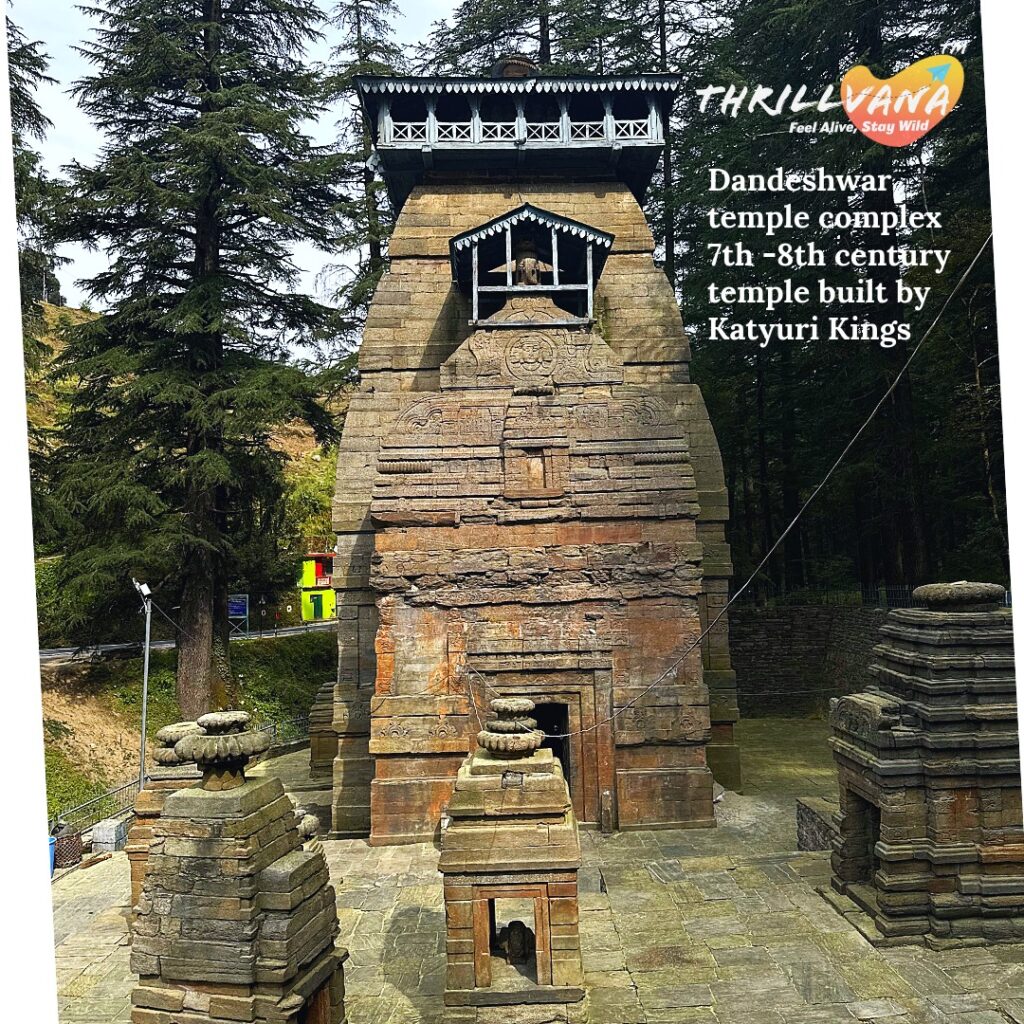

After breakfast, leave the peaceful forests of Jageshwar and continue deeper into Kumaon towards Dharchula, the historic frontier town on the India–Nepal border.
The landscape gradually changes as the roads descend and rise through increasingly rugged mountain terrain. This is also the transition from the cultural landscape of Kumaon to the remote Himalayan region through which the Adi Kailash Yatra continues.
At Dharchula, complete the required documentation, permit formalities and other preparations for entering the restricted high-altitude areas.
Use the evening to rest, organize your essentials and prepare for the next day’s journey into the higher Himalayas.
The Feeling: A gentle transition from mountain travel to frontier expedition.
Drive: Approximately 5–6 hrs
Stay: Dharchula
Today marks the real transition into the remote high-altitude landscape of the Adi Kailash region.
Leave Dharchula and follow the dramatic mountain roads towards Tavaghat, with a stop at Elagad Waterfall along the way. As the road continues beside the Kali River, the terrain becomes narrower and more rugged.
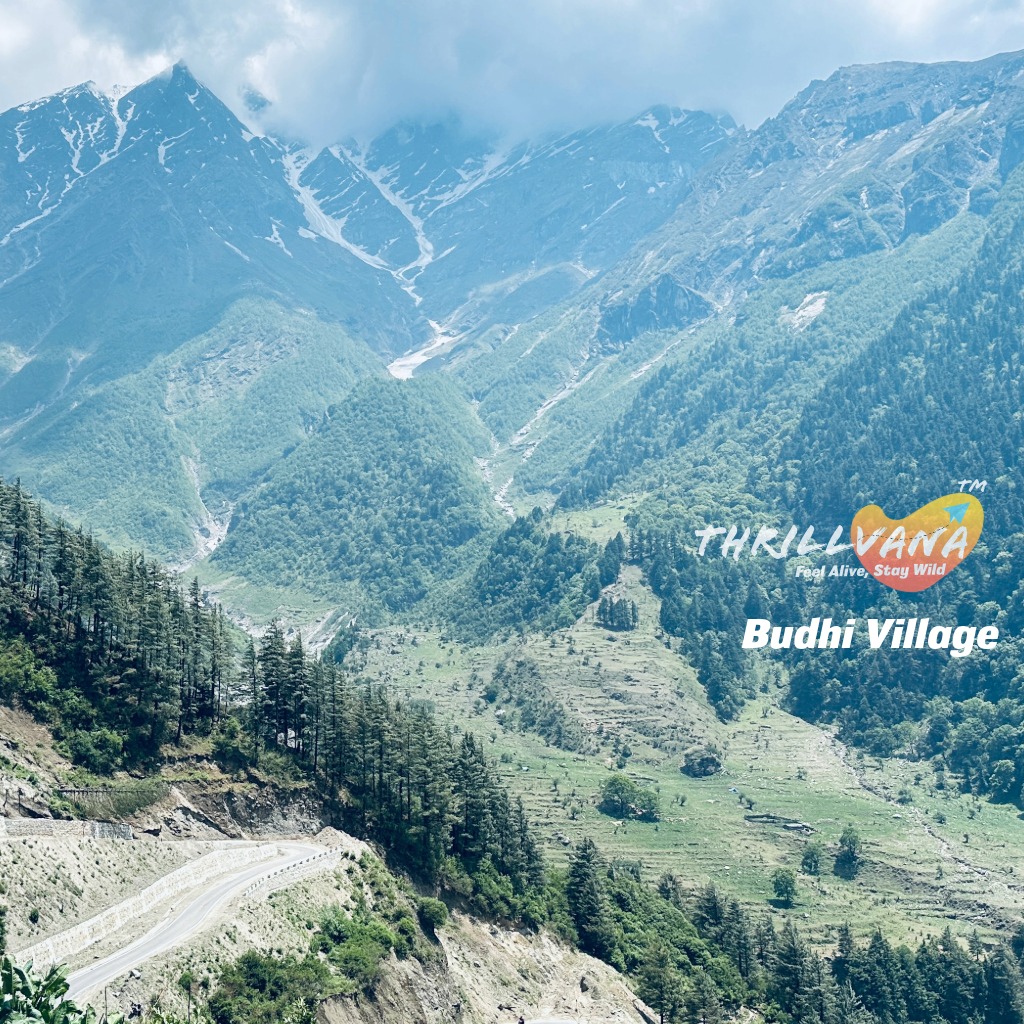
Before reaching Budhi, experience the famous S-Bend, followed by the spectacular series of 36 hairpin bends as the road climbs towards Chiyalekh.
Beyond Chiyalekh, continue through Napalchu towards Gunji/Nabi, where the landscape opens into the high Himalayan valleys.
The evening is for slowing down, settling into your homestay and experiencing the warmth of local Himalayan hospitality.
The Feeling: The road gets tougher, the landscape gets wilder, and the Himalayas begin to feel truly remote.
Drive: Approximately 5–6 hrs, subject to road and weather conditions
Stay: Gunji/Nabi
Today is the spiritual heart of the journey.
Travel towards Kuti, a remote Himalayan village deeply connected with local traditions and legends, before continuing towards Jolingkong and the sacred landscape of Adi Kailash.
At Adi Kailash, take time to experience the mountain and its surroundings rather than treating the visit as simply another sightseeing stop. Continue to Parvati Sarovar, where the mountain and lake create one of the most memorable settings of the Yatra.
For those who are physically comfortable and appropriately acclimatized, the Gauri Kund stretch may be undertaken as an optional experience, subject to local conditions.
After spending time in the Adi Kailash region, return towards Bheem Ki Kheti and then Gunji/Nabi.
The Feeling: A day to pause, breathe and experience the Himalayas beyond the checklist.
Drive: Approximately 6–7 hrs round trip, subject to local conditions
Max Altitude: High-altitude terrain; exact access depends on local conditions
Stay: Gunji/Nabi
Witness the miracle of nature where snow forms the eternal “OM” symbol.
- The Experience: Visit Kalapani, the sacred origin of the Kali River, and the cave where Sage Ved Vyas meditated on the Vedas.
- The Vision: Reach Nabhidhang for the clearest view of Om Parvat. To see the “Om” etched naturally in snow is a moment of pure cosmic connection.
- The Retreat: Descend to the serene Narayan Ashram, a high-altitude sanctuary for peace and philosophy.
Narayan Ashram: The Mysore Connection in the Clouds
“A Piece of Karnataka, 2,734m High in the Himalayas.”
What began as a spiritual retreat for Kailash pilgrims evolved into a vital socio-educational hub. Swami transformed the remote Chaundas Valley by establishing the region’s first modern schools, vocational weaving centers, and healthcare dispensaries, proving that “service to man is service to God.”
Why This is a Must-Visit for You:
-
The Mysore Legacy: Walk the halls founded by a Kannada visionary who brought South Indian discipline and “Seva” to transform the remote Chaundas Valley.
-
A Scholar’s Paradise: Dive into a world-class library featuring rare Himalayan archives and ancient scriptures curated by a scholar who valued education as much as spirituality.
-
The “German” Miracle: Discover the history of how the Swami imported an X-ray machine from Germany—via palanquin!—to bring the region’s first modern healthcare to the tribal Rung community.
At 2,734m, this isn’t just a viewpoint; it’s a living monument to rural empowerment. Visit for the serene Sandhya Aarti, stay for the history, and explore a library filled with rare Himalayan archives.
Drive: 7-8 hrs | Stay: Narayan Ashram / Guesthouse
After an early breakfast, begin the descent towards Patal Bhuvaneshwar, one of Kumaon’s most intriguing sacred sites.
The landscape gradually changes as you leave the high Himalayan frontier behind and travel towards the lower Kumaon hills.
A journey into one of India’s most mysterious cave temples.
Patal Bhuvaneshwar – One Cave. 33 Koti Gods. A Journey 90ft Below.
Your story begins with an adrenaline-pumping descent down iron chains into the Earth’s belly. 90 feet below the Kumaon hills, geology and theology collide in a living 3D map of Hindu mythology. Ancient scriptures claim a single Darshan here bestows the same spiritual merit as the entire Char Dham pilgrimage.
What Awaits You in the Deep:
-
The Crown of Sheshnag: Massive stalactites shaped like the serpent holding up the world.
-
The Ganesha Mystery: A stone Brahma Kamal dripping eternal “Amrit” onto the elephant god’s head.
-
The Four Gates: Stand before the gateways of Randwar, Paapdwar, Dharamdwar, and Mokshadwar.
-
The History: A site discovered in the Treta Yug and rediscovered by Adi Shankaracharya.
Feeling:
From high peaks to sacred depths
Drive: 6–7 hrs
Stay: Hotel near Patal Bhuvaneshwar
After breakfast, leave Patal Bhuvaneshwar and continue towards Chaukori, a peaceful hill station surrounded by the Kumaon Himalayas.
After several days of high-altitude travel, this day provides a welcome change of pace. The journey gradually moves through the greener and more settled landscapes of Kumaon.
Arrive in Chaukori and check into your accommodation. Spend the evening at leisure, enjoying the mountain air and panoramic Himalayan surroundings, with views dependent on weather and visibility.
This is intentionally a quieter day—there is no need to rush.
The Feeling: The expedition begins to soften into reflection.
Drive: Approximately 2–3 hrs, subject to road conditions
Stay: Chaukori
After breakfast, begin the final drive from Chaukori towards Kathgodam.
As the mountain roads gradually give way to the foothills, the physical journey comes to an end. But after Adi Kailash, Om Parvat, the remote Himalayan villages and the sacred landscapes along the way, the experience often continues long after you have left the mountains.
There is no final sightseeing checklist today.
Just the road home, the memories you’ve gathered and the quiet realization that some journeys change the way you see yourself.
The Feeling: You leave the Himalayas behind, but you don’t necessarily leave the journey behind.
Drive: Approximately 6–7 hrs, subject to road and traffic conditions
Drop: Kathgodam
Inclusions
- Complete ground transportation from Kathgodam to the Adi Kailash region and back, with experienced mountain drivers and terrain-suited vehicles.
- Comfortable hotel stays at Jageshwar, Dharchula and Chaukori, selected for location, comfort and accessibility.
- Authentic village homestay accommodation at Gunji/Nabi, offering a closer experience of Himalayan life, local culture and hospitality.
- Ashram/guesthouse stay at Narayan Ashram, offering a peaceful Himalayan experience in the remote Chaundas Valley.
- Comfortable homestay accommodation near Patal Bhuvaneshwar, selected for its proximity to the cave temple and local experience.
- Twin-sharing accommodation as the standard, with group-sharing arrangements possible at Gunji/Nabi, Narayan Ashram and Patal Bhuvaneshwar depending on local availability and room configuration.
- Wholesome meals as specified in your selected package, including fresh, simple and locally prepared food suitable for the Himalayan journey.
- All Inner Line Permits, documentation support and on-ground coordination with the concerned local authorities.
- Dedicated Trip Coordinator, local support team and continuous assistance throughout the journey.
- Basic first-aid, oxygen support, pulse oximeter monitoring at key high-altitude points and high-altitude acclimatization guidance.
Exclusions
- Flights, trains or buses to reach Kathgodam/Haldwani are not included.
- Personal expenses including snacks, beverages, laundry, phone/internet usage and shopping during the journey are not included.
- Travel insurance is not included; high-altitude travel insurance is strongly recommended.
- Emergency evacuation, including helicopter rescue, and any unforeseen medical or hospitalization expenses are not included.
- Any additional expenses arising from weather conditions, landslides, road closures, route changes or permit delays are not included.
- Entry tickets, camera charges or activity charges not specifically mentioned under inclusions are not included.
- Meals and beverages not specified in your selected package are not included.
- Optional services such as pony support for the Gauri Kund stretch, where available, are not included unless specifically mentioned in your package.
- Tips and gratuities for drivers, guides and support staff are not included and remain at your discretion.
Select date
Private journeys are curated experiences and require a quick consultation with our team to align expectations, preferences, and feasibility before booking.
-
Available Available PackagesFridaySeptember 4, 2026FridaySeptember 11, 2026₹45550Available
-
Limited Available PackagesSaturdaySeptember 5, 2026SaturdaySeptember 12, 2026₹45550Available
The Expedition Blueprint: An Odyssey to the Sacred
Adi Kailash Yatra from Kathgodam — The Journey, Route & What to Expect
The Adi Kailash Yatra from Kathgodam is a journey into one of the most remote and spiritually significant landscapes of the Kumaon Himalayas. The route takes you from the forested hills around Jageshwar and Almora towards Dharchula and the high-altitude valleys of the Indo-Tibetan frontier, before reaching Adi Kailash, Parvati Sarovar and Om Parvat.
But this journey is not only about reaching a mountain.
Along the way, you experience ancient temples, Himalayan villages, dramatic mountain roads, sacred rivers, high-altitude landscapes and some of the most isolated regions of Uttarakhand.
At ThrillVana, we believe the experience matters as much as the destination. The itinerary is therefore designed with a balance of spiritual experiences, scenic travel, local culture and enough time to pause and absorb the Himalayas.
The Route at a Glance
Kathgodam → Jageshwar → Dharchula → Gunji/Nabi → Adi Kailash → Om Parvat → Narayan Ashram → Patal Bhuvaneshwar → Chaukori → Kathgodam
The journey covers approximately 8 days and 7 nights, with accommodation changing as the landscape and altitude change.
You begin in the relatively accessible Kumaon hills and gradually move towards the high-altitude frontier before descending through the cultural and spiritual landscapes of Kumaon.
Day 1: Kainchi Dham, Kasar Devi, Golu Devta & Jageshwar
The journey begins from Kathgodam, the traditional gateway to Kumaon.
The first day introduces you to the spiritual character of the region through Kainchi Dham, Kasar Devi, Chitai Golu Devta Temple and finally Jageshwar Dham.
Kainchi Dham
Kainchi Dham is the ashram associated with Neem Karoli Baba, and has become an important spiritual destination in the Kumaon region.
The setting itself is part of the experience—forested hills, a mountain stream and a peaceful Himalayan environment.
Kasar Devi
Near Almora, Kasar Devi Temple is an ancient hill shrine that became particularly well known among spiritual seekers, writers and artists. The nearby Crank’s Ridge has a long association with travellers and people seeking a quieter Himalayan environment.
Chitai Golu Devta
The journey continues to Chitai Golu Devta Temple, dedicated to Golu Devta, a revered deity of Kumaon traditionally associated with justice.
The many bells surrounding the temple have become its distinctive identity.
Jageshwar Dham
The day ends at Jageshwar, a historic temple complex surrounded by magnificent deodar forests.
It is an ideal place to slow down before the journey moves towards the remote Himalayan frontier.
Day 2: Jageshwar to Dharchula
From Jageshwar, the journey continues towards Dharchula, a historic town situated along the Kali River on the India–Nepal border.
This is an important transition day.
The comfortable roads and settled landscapes of Kumaon gradually give way to narrower mountain roads and increasingly rugged terrain.
Dharchula is also where the journey begins to feel distinctly different. The following days take you into a restricted high-altitude region where permits, documentation, local regulations and road conditions become particularly important.
The evening is kept for rest and preparation before entering the higher Himalayan valleys.
Day 3: Entering the High Himalayas
Dharchula → Elagad Waterfall → Tavaghat → S-Bend → Budhi → 36 Hairpin Bends → Chiyalekh → Napalchu → Gunji/Nabi
This is where the character of the journey changes dramatically.
The road follows the Kali River and passes through increasingly remote Himalayan terrain.
Along the way, you encounter Elagad Waterfall, the dramatic S-Bend near Budhi and the famous series of 36 hairpin bends climbing towards Chiyalekh.
The landscape becomes more open and rugged as you approach Gunji and Nabi, villages situated in the high Himalayan region.
Here, accommodation becomes simpler and more local.
Rather than expecting conventional hotel comforts, travellers experience Himalayan homestay hospitality, simple local food and village life.
This change is an important part of the journey.
Day 4: Adi Kailash & Parvati Sarovar
Gunji/Nabi → Kuti → Jolingkong → Adi Kailash → Parvati Sarovar → Gauri Kund → Bheem Ki Kheti → Gunji/Nabi
This is the spiritual centrepiece of the Yatra.
From Gunji/Nabi, the route moves towards Kuti and then onward to the high-altitude landscape around Jolingkong and Adi Kailash.
Adi Kailash, also known as Chhota Kailash, is revered by devotees and has become one of the most important pilgrimage destinations in this part of Uttarakhand.
Parvati Sarovar
Near Adi Kailash lies Parvati Sarovar, a sacred lake that forms one of the most memorable settings of the journey.
Rather than rushing through the location, allow yourself time to simply experience the landscape.
The combination of the mountain, lake and surrounding high-altitude wilderness is what makes this part of the Yatra so powerful.
Gauri Kund — Optional
The Gauri Kund stretch is optional and should only be attempted by travellers who feel physically comfortable and are appropriately acclimatized.
High-altitude conditions can change quickly, and the decision to continue should always take into account your physical condition, weather and local guidance.
After the day’s experience, return to Gunji/Nabi for another night.
Day 5: Kalapani, Ved Vyas Cave & Om Parvat
Gunji/Nabi → Kalapani → Ved Vyas Cave → Nabhidhang → Om Parvat → Narayan Ashram
Begin early for another high-altitude excursion.
Kalapani
Kalapani is traditionally regarded as the source of the Kali River and holds considerable religious and cultural significance in the region.
The surrounding landscape is stark, remote and dramatically different from the greener Kumaon hills experienced earlier in the journey.
Ved Vyas Cave
The region is also associated with Ved Vyas, one of the most important figures in Hindu tradition. The cave and surrounding landscape form part of the area’s rich spiritual traditions.
Nabhidhang & Om Parvat
The journey continues towards Nabhidhang, from where travellers may witness Om Parvat, weather and visibility permitting.
Om Parvat is particularly famous for the naturally occurring snow pattern on the mountain that resembles the sacred ॐ symbol.
Seeing the formation is highly dependent on weather, cloud cover, snowfall and visibility. Therefore, no responsible itinerary should guarantee the view.
After the Om Parvat experience, the journey continues towards Narayan Ashram.
Narayan Ashram — A Different Kind of Himalayan Experience
Narayan Ashram is more than an overnight stop.
Established in the remote Himalayan landscape, the Ashram has a history connected with spiritual practice, education and community service.
Its quiet surroundings provide a natural opportunity to slow down after several days of high-altitude travel.
This is one of the places where the journey becomes less about sightseeing and more about simply being present.
Depending on local arrangements and operating conditions, travellers may have an opportunity to explore the Ashram and experience its peaceful surroundings.
Day 6: Narayan Ashram to Patal Bhuvaneshwar
After breakfast, begin the journey towards Patal Bhuvaneshwar.
The landscape changes once again as you leave the high Himalayan frontier and gradually return towards the lower Kumaon hills.
Patal Bhuvaneshwar offers an entirely different experience from the open mountain landscapes of Adi Kailash and Om Parvat.
Patal Bhuvaneshwar Cave Temple
Patal Bhuvaneshwar is a naturally formed limestone cave system with deep religious significance.
The cave descends underground and contains naturally formed rock structures that have been interpreted through Hindu religious traditions.
The experience is very different from a conventional temple visit. It combines natural geology, mythology and living religious practice within a confined underground environment.
The cave should be explored according to the instructions of local authorities and temple personnel.
Stay: Patal Bhuvaneshwar
Day 7: Patal Bhuvaneshwar to Chaukori
After breakfast, leave Patal Bhuvaneshwar for Chaukori, one of the quieter hill destinations of Kumaon.
By this stage of the journey, the pace deliberately begins to soften.
Chaukori provides an opportunity to rest after the physically demanding high-altitude section of the Yatra.
On a clear day, the surrounding Himalayan landscape offers beautiful mountain views, although visibility naturally depends on weather conditions.
There is no need to fill the evening with activities.
Sometimes the best part of a Himalayan journey is simply sitting quietly and watching the mountains.
Stay: Chaukori
Day 8: Chaukori to Kathgodam
After breakfast, begin the return journey towards Kathgodam.
The road gradually descends from the hills towards the foothills, bringing the physical journey to an end.
But an Adi Kailash Yatra is rarely remembered only for the destination.
You carry back the memories of the road, the silence of the high mountains, conversations in Himalayan villages, temple bells, changing landscapes and the moments when the mountains made you stop and simply breathe.
The journey ends. The Yatra stays.
Accommodation: What Should You Expect?
Accommodation changes according to the region.
At Jageshwar and Dharchula, travellers can expect more conventional accommodation.
At higher-altitude locations such as Gunji/Nabi, accommodation is generally simpler and may be provided through carefully selected local homestays.
Remote Himalayan accommodation cannot always be compared with city hotels.
At Narayan Ashram and Patal Bhuvaneshwar, facilities are also more basic and location-dependent.
The purpose is not luxury.
It is to experience the Himalayas while maintaining reasonable comfort, cleanliness and practical support within the limitations of the terrain.
High-Altitude Travel: What You Should Know
Adi Kailash is a high-altitude journey, and altitude affects every traveller differently.
You do not need to be an experienced mountaineer, but you should be reasonably fit and prepared for:
Long mountain drives
Walking on uneven terrain
Cold and changing weather
Reduced oxygen availability at higher elevations
Basic accommodation in remote areas
Early starts on excursion days
Symptoms such as headache, dizziness, nausea, unusual fatigue or breathlessness should never be ignored.
Our team provides basic first aid, oxygen support, pulse-oximeter monitoring at key high-altitude points and acclimatization guidance, but these measures are not a substitute for medical evaluation.
Travel insurance with appropriate high-altitude coverage is strongly recommended.
Permits & Documentation
The Adi Kailash region falls within a sensitive frontier area, and travellers require the applicable permits and documentation for access.
ThrillVana coordinates the required Inner Line Permit process and on-ground documentation support as part of the trip arrangements.
Travellers should provide the required documents within the timelines communicated by the ThrillVana team.
Access to certain areas can also depend on government regulations, security conditions, weather and local road conditions.
Weather & Conditions
Weather changes significantly as the altitude increases.
Jageshwar / Dharchula: Generally milder mountain conditions.
Gunji / Nabi: Cooler temperatures, particularly after sunset.
Adi Kailash / Jolingkong / Nabhidhang: Cold, windy and highly variable conditions.
Snow, rain, cloud cover, road conditions and local restrictions can affect the itinerary.
For this reason, exact sightseeing sequences and travel times should always be understood as subject to weather, road and local operating conditions.
Responsible Travel in the Himalayas
The Adi Kailash region is not simply a tourist destination. It is a fragile high-altitude environment and home to communities whose lives are closely connected with the mountains.
We encourage travellers to:
Carry their waste back with them.
Avoid single-use plastic wherever possible.
Respect local customs and religious places.
Ask before photographing local people.
Avoid disturbing wildlife or fragile natural areas.
Use water responsibly.
Support local homestays, drivers and community services wherever possible.
The goal is simple:
Travel through the Himalayas as a guest, not as a consumer.
Who Is This Yatra Suitable For?
This journey is suitable for travellers who want more than a conventional sightseeing tour and are comfortable with remote mountain travel.
It can be a good fit if you:
Enjoy slow and meaningful travel
Appreciate spirituality and Himalayan culture
Are comfortable with long mountain drives
Can manage walking on uneven terrain
Are prepared for simple accommodation at remote locations
Understand that mountain travel involves uncertainty
It may not be suitable for someone looking for a conventional luxury holiday or a tightly predictable itinerary.
What Makes the ThrillVana Adi Kailash Yatra Different?
The objective is not simply to take you from Kathgodam to Adi Kailash and back.
The route has been designed to allow the journey itself to become part of the experience.
From the bells of Chitai Golu Devta and the deodar forests of Jageshwar to the remote villages of Nabi, the silence around Adi Kailash, the sacred landscape of Om Parvat and the peaceful setting of Narayan Ashram, every stage brings a different dimension of the Himalayas.
You don’t just visit the Himalayas.
You experience them.
And perhaps that is what stays with you longest after you return home.
FAQs
General
Well-connected starting point from Delhi & major cities.
Covers major spiritual sites en route (Jageshwar, Neem Karoli Baba Ashram).
Ideal for first-time yatris.
Smooth acclimatization journey.
Complete Himalayan experience from base to inner regions.
Yes. Ideal for first-time yatris with basic fitness. No prior trekking experience required.
No. You can either:
- Round Trek (~4-5 km), or
- Take a pony/horse (own cost, subject to availability)
Moderate. The challenge is altitude & road conditions, not trekking distance.
We manage everything. You just need to share documents in advance and be medically fit.
No. There are no ATMs on this trek route. You will have to draw enough cash in Dharchula or earlier. There are a number of ATMs in these cities. Everything is paid in Cash in rupees beyond Dharchula, No UPI will work.
Connectivity is limited and intermittent.
- Dharchula: Good network (Jio, Airtel, BSNL)
- Gunji / Nabhi / Jolingkong: Mostly BSNL works occasionally
- Other networks are usually unavailable
Expect to be mostly offline in high-altitude regions
Important Note
This journey is designed for disconnection from noise and reconnection with nature.
We recommend informing family in advance and enjoying the rare experience of being truly offline.
Yes, basic oxygen & first aid are available. However, this is a remote Himalayan region.
Yes, due to government regulations, only limited permits are issued per batch, so early booking is recommended.
Yes, the package includes accommodation, meals, permits, and local transport from Kathgodam.
Adi Kailash Route & Places: FAQs
The 8-day Adi Kailash Yatra from Kathgodam follows a relaxed Himalayan route covering Jageshwar, Dharchula, Gunji/Nabi, Adi Kailash, Om Parvat, Narayan Ashram, Patal Bhuvaneshwar and Chaukori before returning to Kathgodam. The route is designed to give travellers time for important spiritual sites, mountain landscapes and acclimatization rather than rushing through the journey.
The journey includes Kainchi Dham, Kasar Devi, Chitai Golu Devta, Jageshwar Dham, Dharchula, Elagad Waterfall, S-Bend, the 36 hairpin bends, Chiyalekh, Gunji/Nabi, Adi Kailash, Parvati Sarovar, Gauri Kund, Kalapani, Om Parvat, Narayan Ashram, Patal Bhuvaneshwar and Chaukori. The combination makes this more than a direct Adi Kailash pilgrimage—it is a journey through some of Kumaon and Pithoragarh's most significant spiritual and scenic destinations.
Jageshwar Dham is one of Kumaon's most important Shiva pilgrimage sites, set among ancient deodar forests along the Jata Ganga. The temple complex has around 125 temples and 174 sculptures, with inscriptions and architectural remains spanning centuries. Uttarakhand Tourism notes that the complex is protected by the Archaeological Survey of India (ASI) and that many of its temples were built or renovated under the Katyuri rulers.
Why we include it: Jageshwar brings ancient Himalayan Shaivism into the Adi Kailash journey before you enter the remote frontier.
Kasar Devi is known for its ancient temple, spiritual heritage and the atmospheric Crank's Ridge above Almora. The temple is traditionally dated to around the 2nd century CE, and Uttarakhand Tourism records that Swami Vivekananda visited Kasar Devi in the 1890s. The area later became a gathering place for spiritual seekers and thinkers from India and abroad.
Why we include it: It is a quieter, contemplative stop that introduces travellers to Kumaon's unusual blend of spirituality, nature and intellectual history.
Yes. Kainchi Dham is included on Day 1. The Hanuman temple and ashram was founded by Neem Karoli Baba (Maharajji) in 1962 and later became internationally known through the people influenced by his teachings. Among its most famous visitors was Steve Jobs, who travelled to India in 1974 seeking spiritual guidance. Mark Zuckerberg has also visited Kainchi Dham.
Why we include it: Before heading towards the high Himalayas, the journey begins with a place that has become an important part of India's modern spiritual history.
Chitai Golu Devta Temple is one of Kumaon's best-known local shrines, dedicated to Golu Devta, a revered deity of the region associated with justice. The temple is especially famous for its thousands of bells and written petitions. Devotees traditionally offer a bell after a wish is fulfilled, creating the distinctive sound and appearance for which the shrine is known.
The S-Bend and 36 hairpin bends are dramatic sections of the mountain road encountered as the route climbs towards the high Himalayas beyond Dharchula. These sections showcase the steep, rugged terrain of the frontier region and are part of the road experience before reaching areas such as Chiyalekh and Gunji/Nabi. Road conditions can vary with weather, so actual travel time may change.
Elagad Waterfall is a scenic mountain stop on the route from Dharchula towards the higher Himalayan villages. It provides a natural break during the drive before the road continues towards Tawaghat and the frontier region. Water flow and accessibility can vary depending on season and local road conditions.
Parvati Sarovar, also known as Parvati Tal, is the sacred lake near Adi Kailash. The mountain's reflection in the lake creates one of the most memorable views of the pilgrimage. The Pithoragarh district administration identifies Parvati Lake and Gauri Kund among the important sacred features of the Adi Kailash region.
Kalapani is an important high-altitude location on the Adi Kailash–Om Parvat route and is associated with the origin of the Kali River. It is also a significant stop before continuing towards the Om Parvat viewing area. Because this is a sensitive, high-altitude frontier region, access and movement are subject to prevailing local conditions and permissions.
Om Parvat is a distinctive Himalayan mountain known for the naturally occurring formation resembling the sacred ॐ symbol on its face. The Pithoragarh district administration states that Om Parvat can be viewed from Nabhidhang, making it one of the major highlights of the Adi Kailash and Om Parvat Yatra.
Narayan Ashram offers a quieter spiritual and cultural experience after the high-altitude Adi Kailash and Om Parvat sections. The stay provides an opportunity to slow down, experience the remote Himalayan environment and learn about the ashram's contribution to education, social development and spiritual life in the region.
Patal Bhuvaneshwar is an ancient cave temple complex in Pithoragarh district associated with Lord Shiva and Hindu traditions. The cave experience takes travellers below ground into a naturally formed limestone cave system containing distinctive rock formations that have acquired religious significance over generations. It provides a very different experience from the high-altitude landscapes of Adi Kailash.