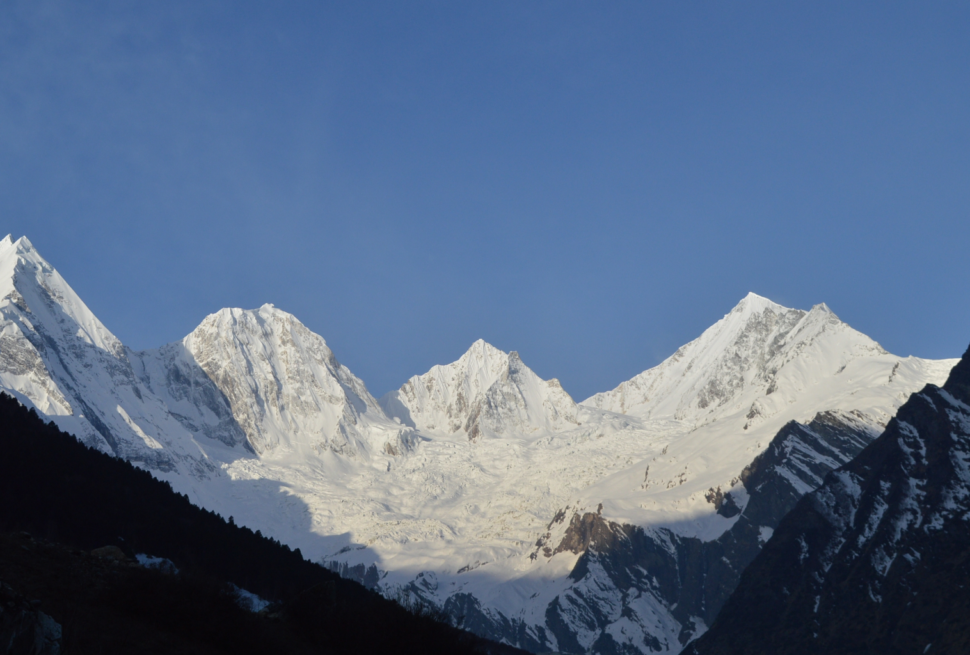


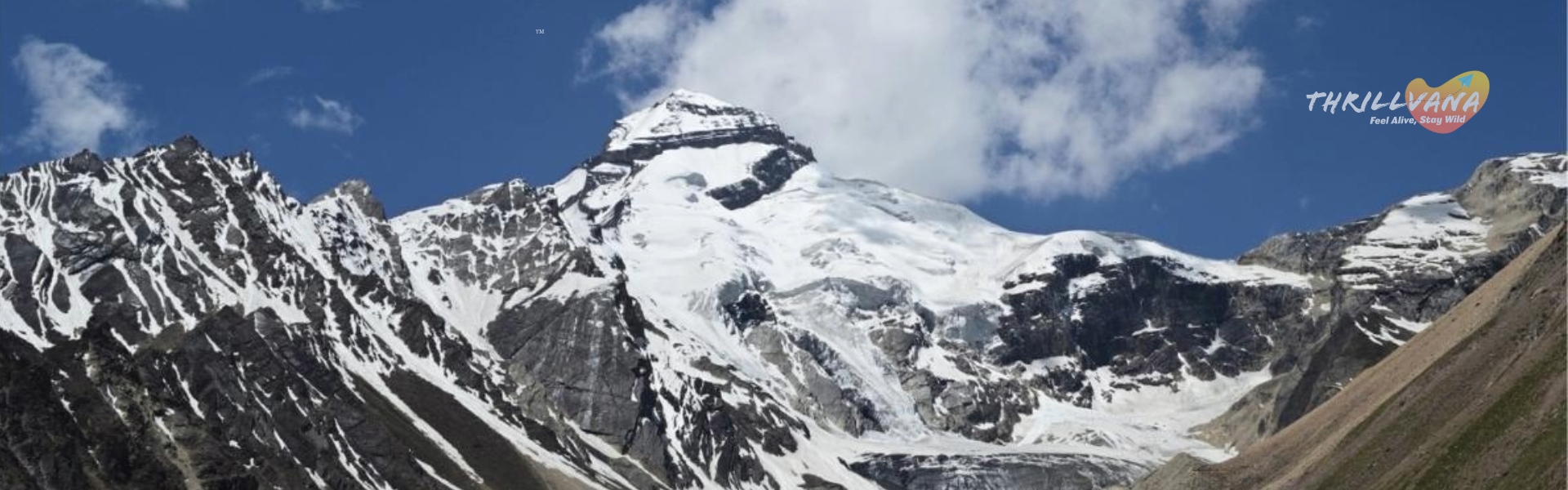
Adi Kailash History & Legends: The Sacred Path of the Pandavas and Rung Guardians
A story of ancient paths, the Rung guardians, and the mountain that still chooses who gets to see it.
Nobody discovers Adi Kailash.
You don’t arrive here by accident. You don’t stumble upon it the way you would a destination marked on a map. Somewhere after the last village, after the road begins to fade into silence, something shifts. The conversations become fewer. The need to explain things disappears.
And slowly, you begin to feel something unfamiliar—yet strangely known. Not excitement. Not even awe.
Recognition.
As if this place was never new to you. Only forgotten.
At a Glance: The Sacred Legacy * Location: Vyas Valley, Pithoragarh, Uttarakhand (The Gateway to Ancient Tibet).
Spiritual Heart: The “Chota Kailash” and the natural ॐ (Om) formation on Om Parvat.
Primary Custodians: The Rung (Bhotiya) community of the high Kumaon Himalayas.
Historical Path: The legendary trail walked by the Pandavas during their Swargarohan ascent.
The Rung Community: Guardians of the Sacred Valley
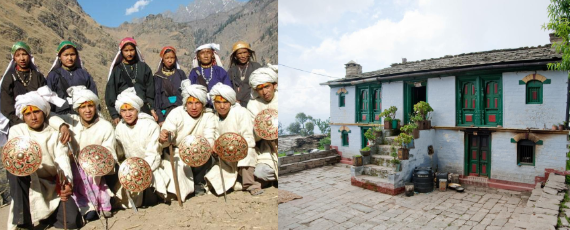
Long before routes were documented or modern expeditions were mapped, these mountains already had their keepers. The Rung communities of the Vyas, Darma valleys and Kuthi have lived here not as visitors, but as a pulse within the landscape itself.
What appears remote and formidable to an outsider has always been a home to them.
They knew of a mountain where the snow naturally carves the sacred syllable ॐ.
They held the secrets of a “Hidden Kailash” long before it reached a GPS.
They walked the ancient Trans-Himalayan trade routes, connecting the Indian heartland to the high plateaus of Tibet through sheer resilience and faith.
For the Rung people, there were no written records or formal surveys. There was only Memory.
Knowledge Held in Silence There were no written records. No formal maps. Only memory—carried across generations through stories told in the Rung-lo language. To the Rung people, the mountains were not scenery; they were a presence.
They were not discovering anything. They were simply remembering.
Thrillvana Insight: When you travel with us, you are walking paths kept alive by Rung hospitality. Their traditional “Kuti” villages aren’t just stops on a map—they are the final outposts of a culture that has protected this sacred geography since the time of the Vedas.
Editor’s Note : The Rung community’s continuity is the ultimate proof of the region’s sacred history. When you travel with us, you aren’t just visiting a peak; you are stepping into a lineage of guardianship that has remained unbroken for centuries.
Mahabharata Trail: Walking the Path of the Pandavas toward Swargarohan

At some point along the journey, someone points toward the jagged horizon and says: “These are the Panchachuli—the five chimneys where the Pandavas cooked their last meal on earth.”
You expect it to feel like mythology—distant and symbolic. But here, in the thin air of the Kumaon Himalayas, the Mahabharata doesn’t feel like a story from a book. It feels like a memory that never left the soil.
The Legends of Kuti and Bhim Ki Kheti
As you move deeper into the Vyas Valley, you aren’t just passing through scenery; you are crossing through the footprints of the ancients:
Bhim Ki Kheti: Vast, flat patches of land near Nabidhang that, according to local Rung tradition, were cultivated by Bhima himself.
The Fort of Kuti: The village of Kuti, named after Mata Kunti, still holds the remains of what is believed to be the Pandavas’ residence.
Pandava Swargarohan: The “Ascent to Heaven” trail where each peak of the Panchachuli represents the final pause of a brother.
There is no clear line between what is believed and what is seen. And perhaps, on the path to Adi Kailash, there never was.
Traveler’s Note: While these sites are deeply spiritual, they are also physical locations you will encounter. We recommend stopping at Kuti village to speak with the locals; their oral history often provides more detail than any textbook.
Adi Kailash vs. Mount Kailash: The Spiritual Connection

You will often hear people describe Adi Kailash as “Chota Kailash” or a substitute for the Tibetan Mount Kailash. But that comparison misses the essential truth of the Skanda Purana.
Adi Kailash is described as the seat of the Adi Yogi—the place of stillness and origin. The Shiva Purana places this region within the personal journey of Shiva himself. This mountain is not a substitute; it is a primary chapter of the same sacred story.
At its base lies Gauri Kund—a quiet, reflective lake that feels less like water and more like a pause in time. People don’t speak loudly here. Not because they are told not to—but because it simply doesn’t feel right to disturb the silence.
Read More
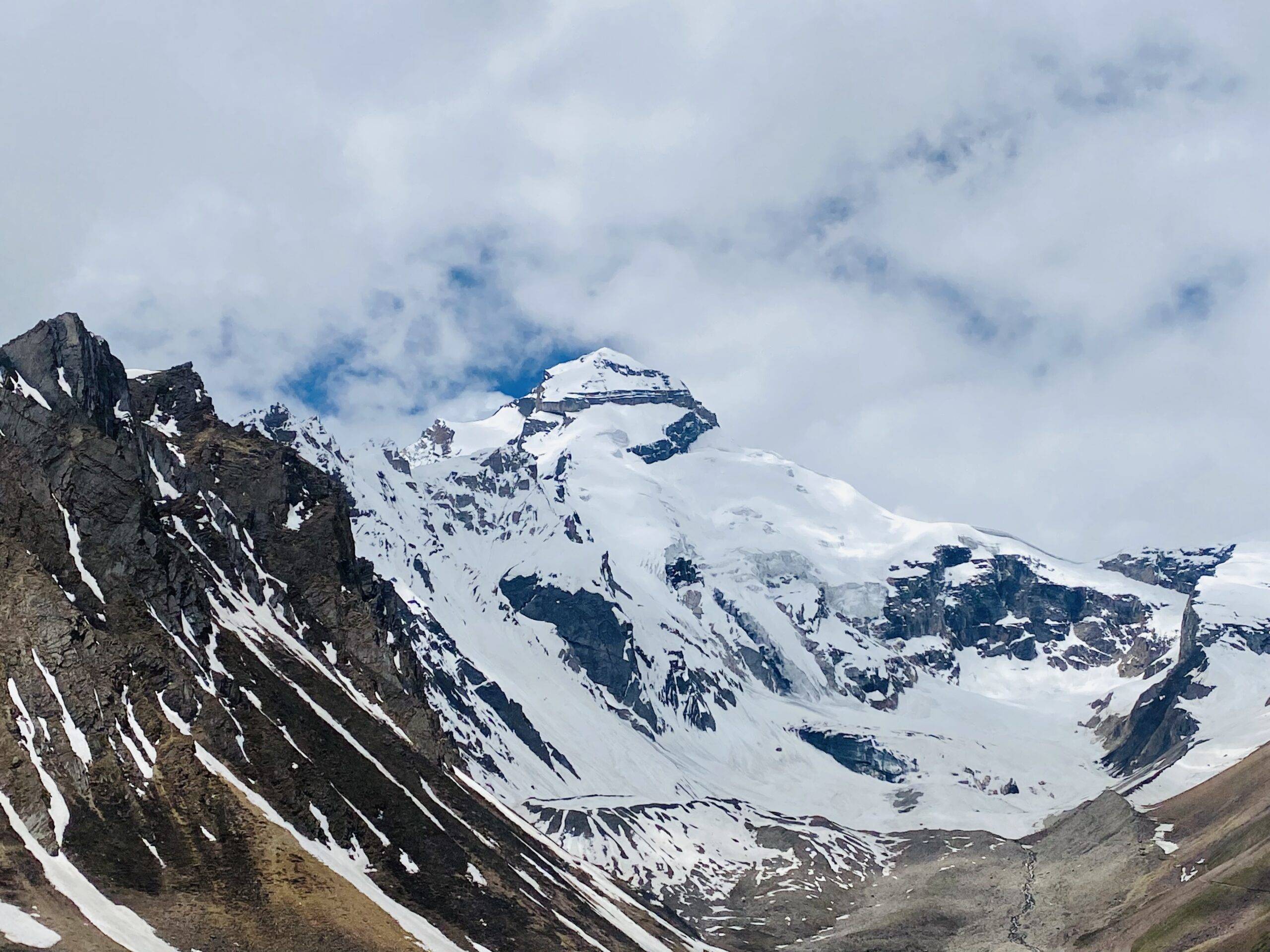
Om Parvat: The Mountain That Chooses to be Seen
There are places you go to see something. And then there are places that reveal themselves. Om Parvat belongs to the latter.
Every year, snow settles on its face in the form of the sacred syllable ॐ (Om). No one shapes it; no one maintains it. And yet, it appears—sometimes clearly, sometimes veiled in Himalayan mist. This is why locals in the Vyas Valley don’t talk about “visiting” Om Parvat; they talk about whether they were allowed to see it.
As if the mountain decides.
As if the mountain decides. Read More
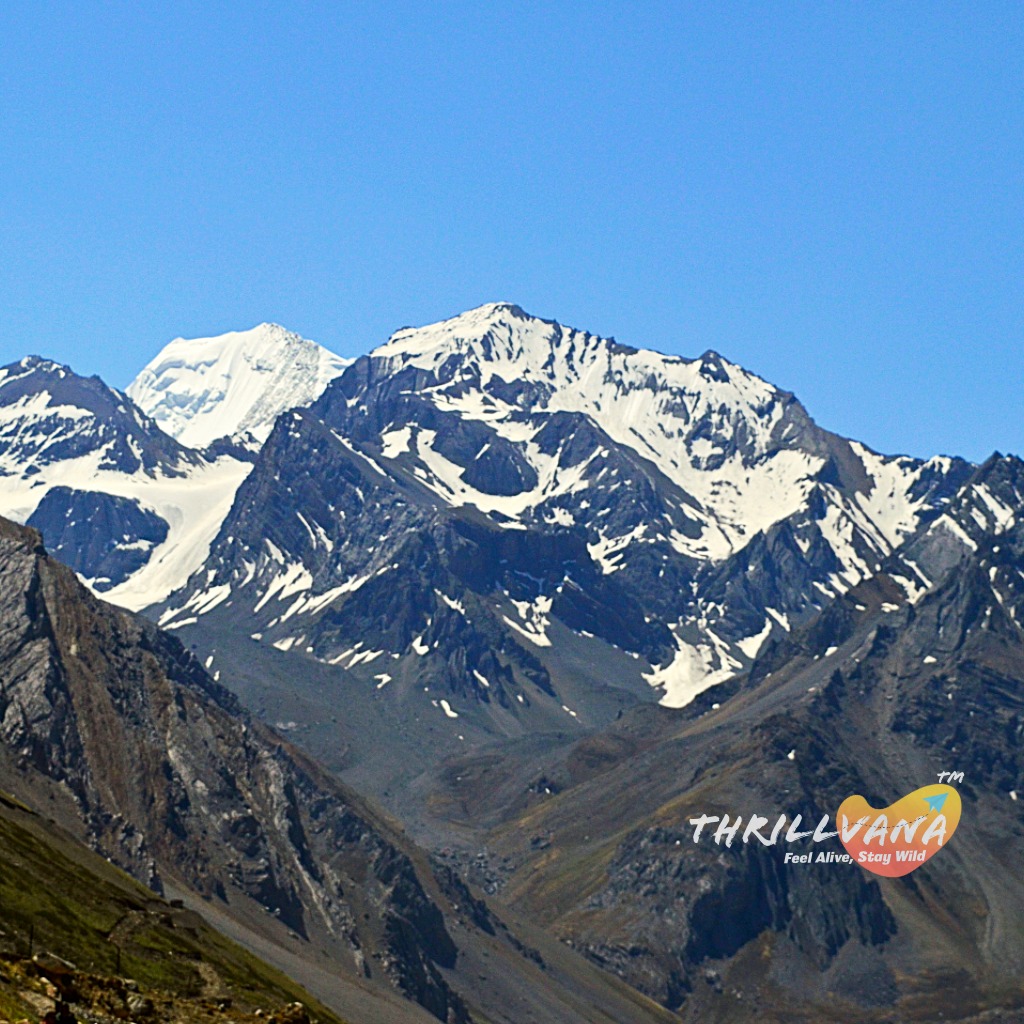
“I have stood before the peaks of the Vyas Valley three times. I have seen Om Parvat hidden in clouds and revealed in gold. This isn’t just a destination I sell; it is a presence I have felt—gathered from the wind at Nabidhang and the wisdom of the elders of Kuti.” — Rishi Raman, Founder of Thrillvana
The Spy-Monk of the Himalayas: How Nain Singh Rawat Mapped the Vyas Valley

In the 19th century, when much of the Kumaon region remained a mystery to the outside world, one man began to draw the lines of its soul: Nain Singh Rawat.
Born in these very mountains, Rawat carried knowledge that didn’t come from textbooks. As one of the “Great Trigonometrical Surveyors,” he travelled through Tibet disguised as a monk. He counted his every step using a modified rosary and hid his geographic observations inside a prayer wheel.
To the British surveyors, he was a master of precision. But to these mountains, he was simply someone who knew how to walk them. He wasn’t inventing a route; he was documenting a path that had been lived by the Rung community for generations.
When Knowledge was Translated, Not Created
In the late 1800s, E.T. Atkinson compiled the Himalayan Gazetteer. While it became a detailed record of the cultural landscape and routes of Kumaon, it was essentially a work of translation. The valleys, the sacred connections, and the high-altitude passes were already known. The world was simply beginning to read in print what the mountains had whispered for centuries.
The Silence of 1962: When Borders Closed the Path
In 1962, the geography didn’t change—but the world around it did. After the war, movement across the high Himalayan passes stopped almost overnight. Ancient trade routes that had connected the Indian plains to Tibet for centuries fell silent.
The journey to Kailash Mansarovar came to a complete halt.
On the Indian side, the routes toward Adi Kailash remained physically open but became restricted, heavily monitored, and shrouded in uncertainty. For decades, the yatra faded from common memory. Not because the mountain disappeared, but because the road to it became a geopolitical wall.
And yet, nothing changed where it mattered.
The peaks remained.
The rivers continued their descent.
The stories stayed alive—held quietly by the Rung communities who never left.
How the Journey Returned
The path didn’t reopen in a single moment; it returned as a slow, quiet transformation. Through the 1980s and 90s, limited access resumed for the few who knew the terrain. Today, infrastructure has reached deeper into the valleys. What once required weeks of grueling trek can now be approached in days.
The Adi Kailash route is accessible again—not because the mountains changed, but because the path to them did. For those who walk it today, the experience still carries the same silence and depth that Nain Singh Rawat recorded two centuries ago.
Begin Your Journey If this place is calling you, take your time before answering. Read more. Prepare well. Understand what this journey asks of your spirit.
And when you’re ready— Explore our Adi Kailash and Om Parvat Expeditions or start with our Complete Travel Guide to understand the route, conditions, and the legacy you are about to join.
Adi Kailash & Om Parvat Yatra from Dharchula
Adi Kailash Self Drive Expedition from Dharchula | Om Parvat
Adi Kailash & Om Parvat Yatra (6N/7D) — Women's Special Edition
Credits & Sources
This article is a synthesis of historical, cultural, and spiritual knowledge drawn from multiple sources, including:
Skanda Purana and Shiva Purana for scriptural references.
Mahabharata for regional mythological context.
The Himalayan Gazetteer by E. T. Atkinson.
Documented accounts of Nain Singh Rawat and the Great Trigonometrical Survey.